
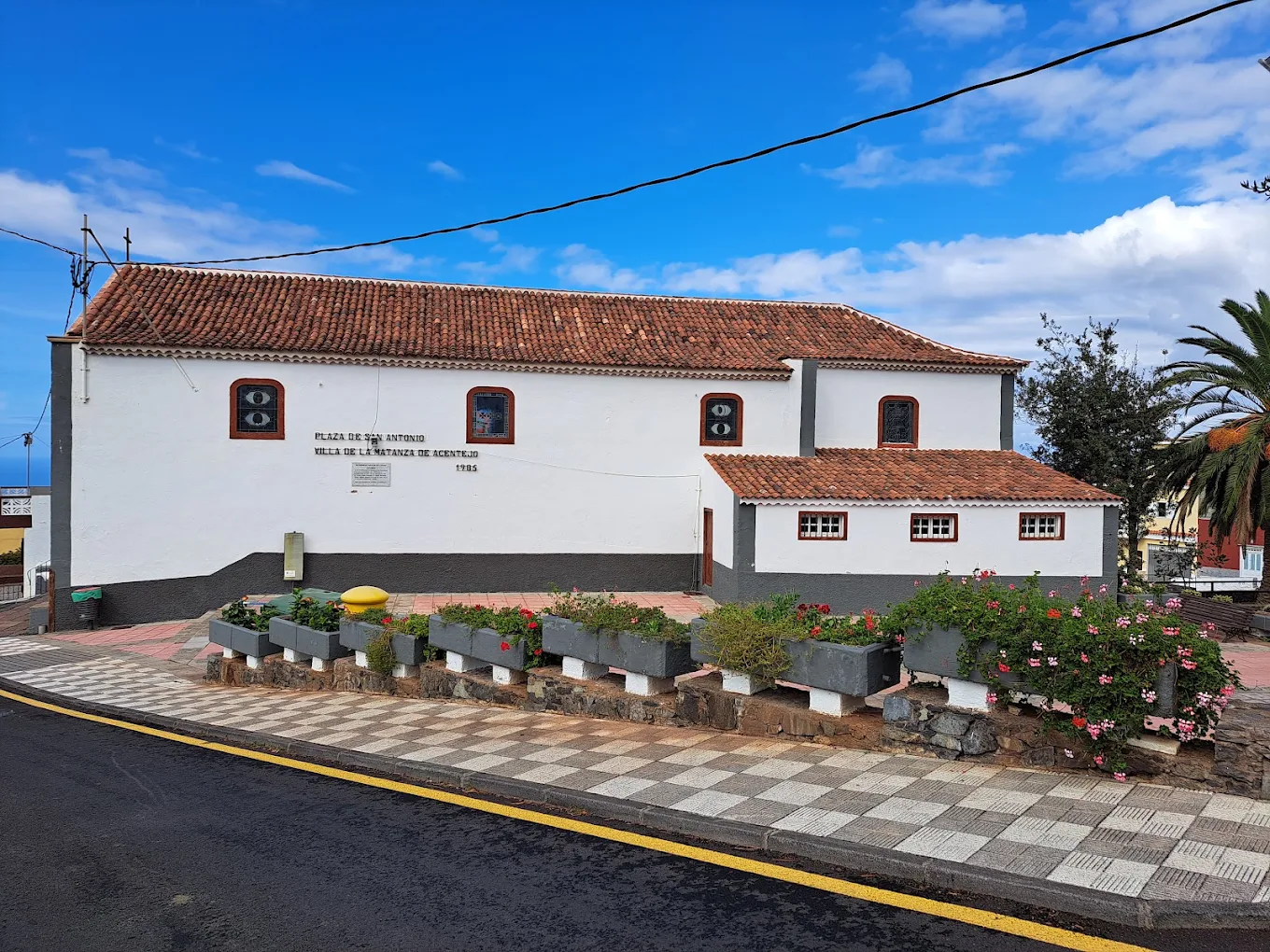
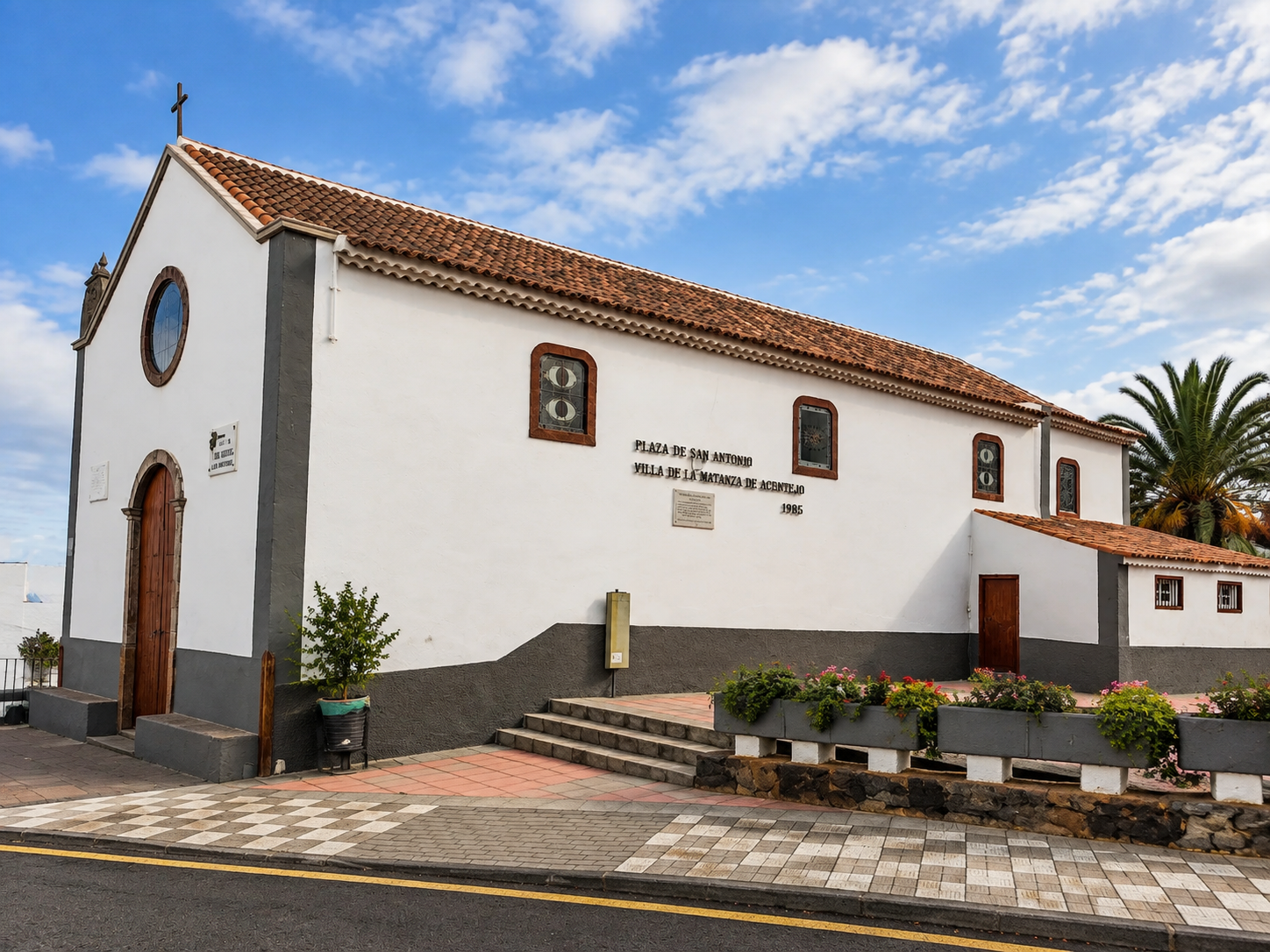
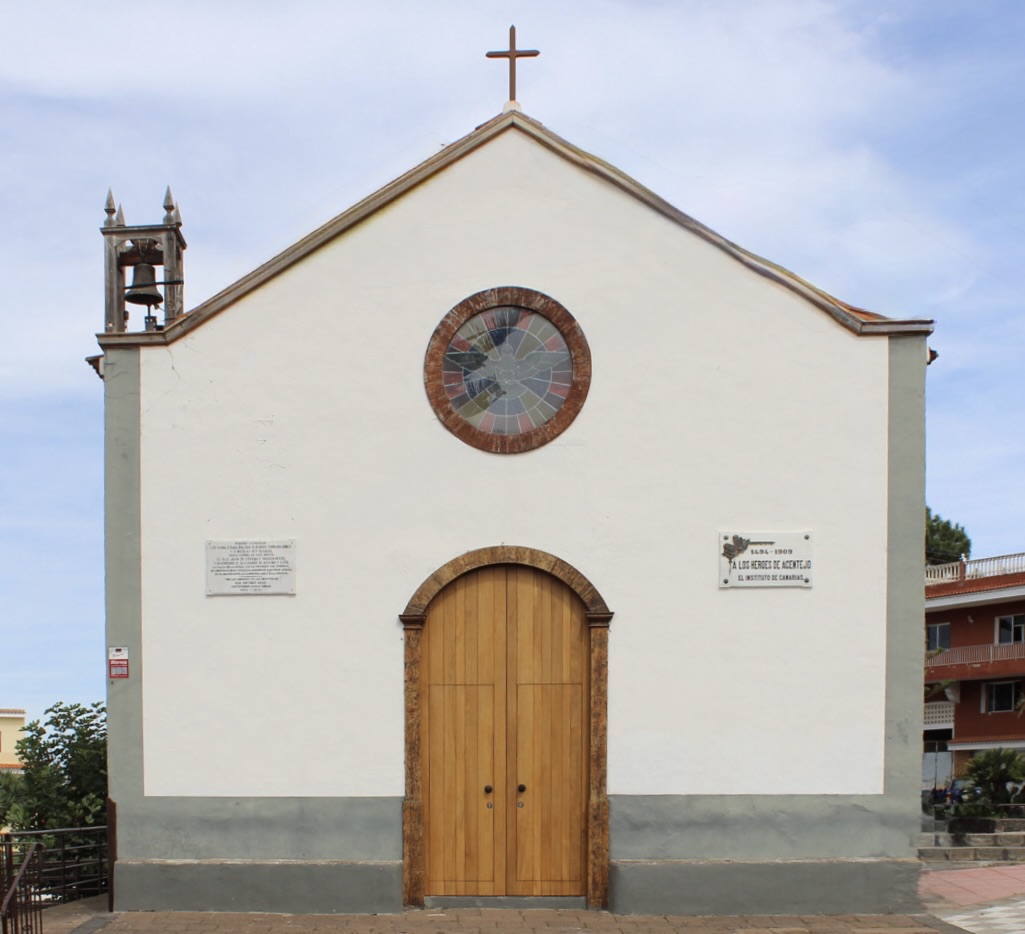
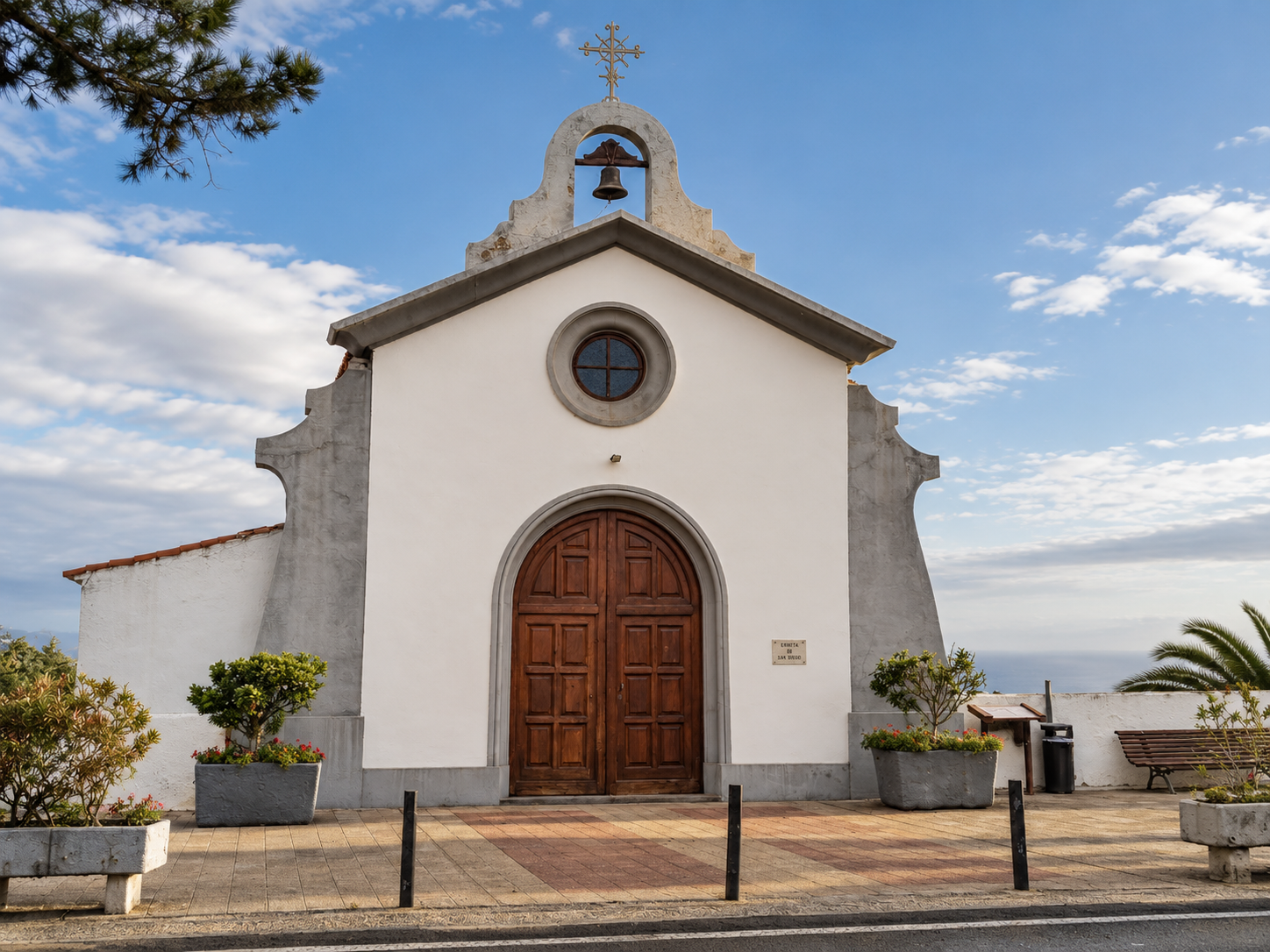
Although the historical debate remains open, the history of the San Antonio Abad Sanctuary is closely linked to the famous Battle of Acentejo. According to tradition, one of the battle sites lies just a short distance from the sanctuary, in the Acentejo Ravine. According to this account, the confrontation of May 1496 between the Guanches led by Mencey Bencomo and the Castilians under Alonso Benítez de Lugo included Antón Vallejo, a native of Madrid who would later become a notary of the Tenerife Island Council. At one point during the fighting, fearing for his life, he prayed to his patron saint and vowed that, if he survived, he would build a chapel in his honour.
After the island was pacified, this area formed part of the lands granted to Antón Vallejo. The patronage and chaplaincy were established on 19 June 1539, by which time the sanctuary is believed to have already been built. For this reason, the statue of the patron saint is considered the first image of a saint to have arrived in Tenerife. Stylistically, it has been dated to the tradition of Spanish sculpture of the late 15th and early 16th centuries.
In 1882, while preserving part of the original structure, the sanctuary was enlarged and provided with a square thanks to the initiative of its patron, Teresa Salazar de Benítez. A century later, in 1984, the entire surrounding area was remodelled to create its present-day appearance. The site has since been enhanced through the improvement and expansion of the facilities surrounding the sanctuary, including the restoration of two traditional Canarian houses with distinctive roofs and balconies, as well as the refurbishment of what was for many years the first and only public livestock dragging arena in Tenerife. The future Acentejo Ravine and Battle Interpretation Centre is currently under construction nearby.
To mark the Feast of San Antonio Abad, every 17 January and on the following three Sundays, the sanctuary and its surroundings become a meeting point for thousands of people from across the island, gathering for what is believed to be the oldest livestock fair in Tenerife. One of the highlights is the Octava Ganadera, held on the second Sunday, when livestock farmers bring their animals to fulfil the tradition of passing before the saint and receiving his protective blessing.
In recent years, another tradition has also been revived: livestock farmers make the journey on foot from La Laguna to La Matanza. The celebration is also an occasion for worshippers to give thanks for favours received and fulfil their promises. Traditions still observed include placing votive offerings in the form of small wax figures on the altar and passing beneath the saint’s processional platform after tugging at his cloak, in the hope of receiving his help in finding a partner.
Share


360º Images
The panoramic view could not be loaded on this device.

All of La Matanza,
in one guide