
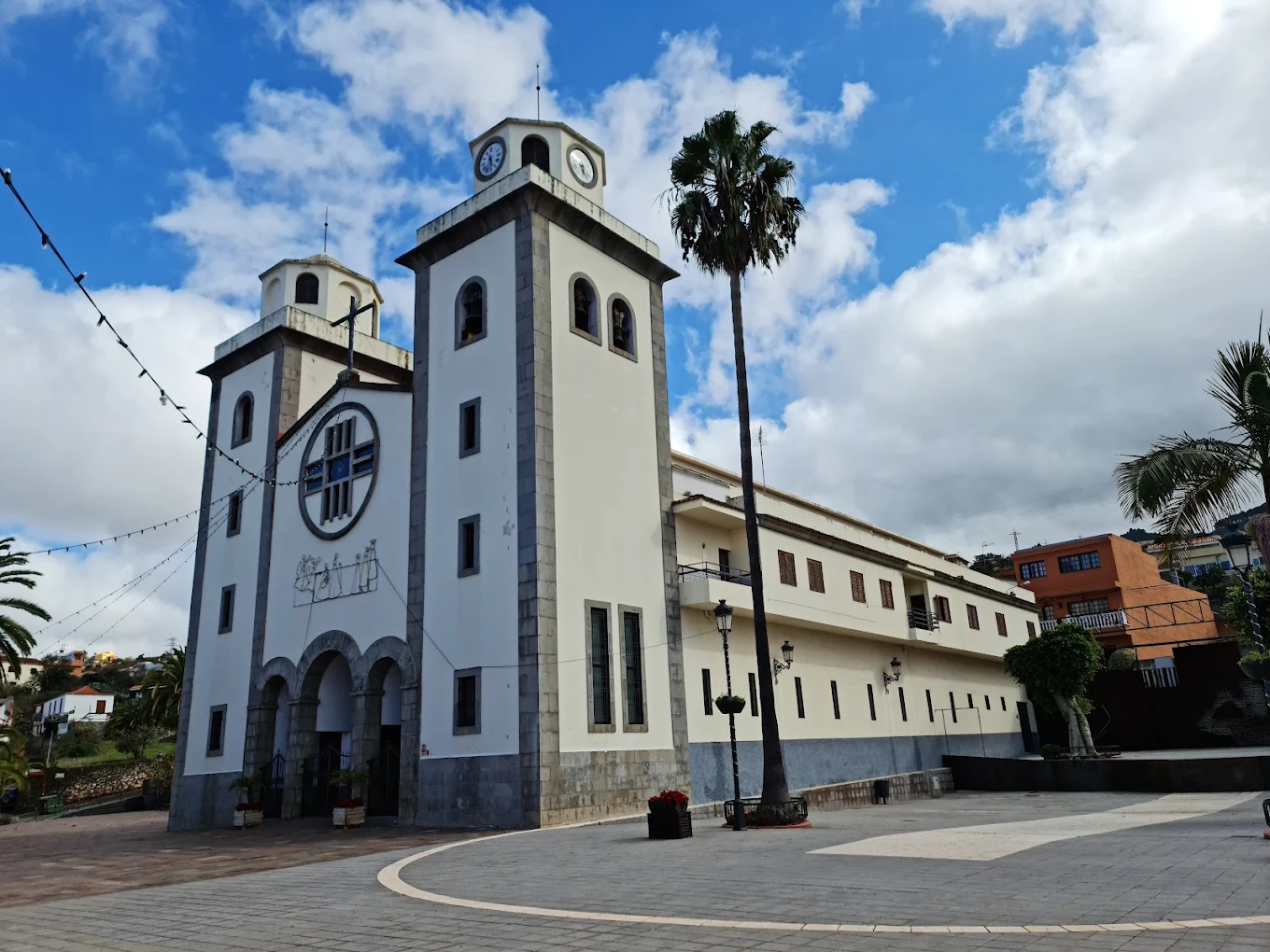
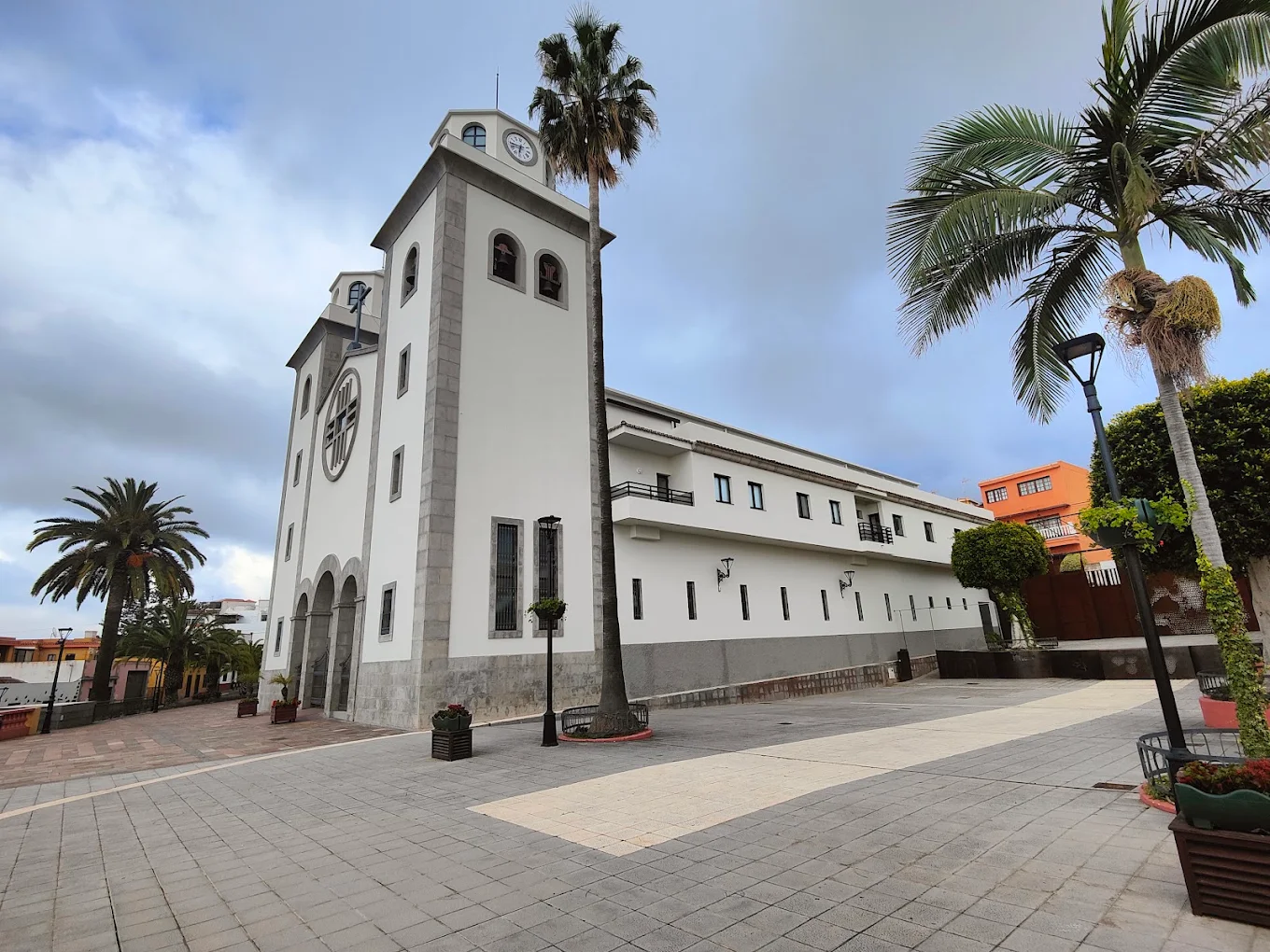
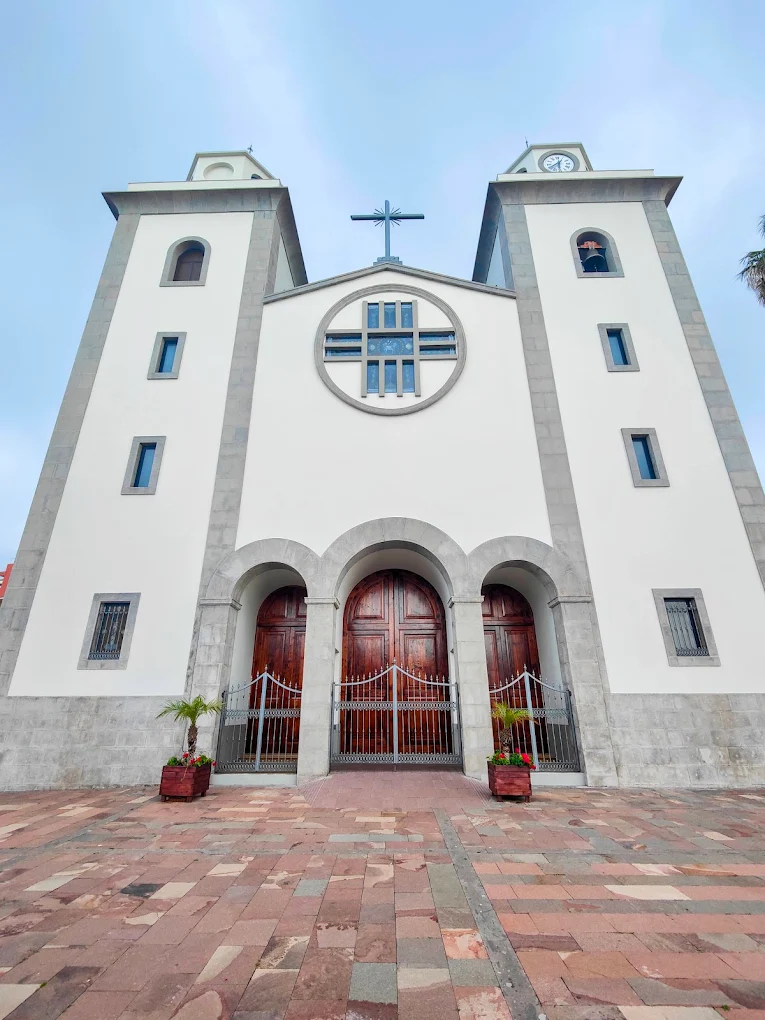
Evidence suggests that a small and modest hermitage was built on this site during the first half of the 16th century, marking the beginning of the history that would eventually lead to the present-day church, dedicated to Our Lord the San Salvador of the World.
By the beginning of the 17th century, the settlement appears to have had a more substantial religious building. In 1614, it became an independent parish benefice from El Sauzal and, shortly afterwards, a parish in its own right, with the Blessed Sacrament installed the following year. Between 1660 and 1670, the church was considerably enlarged, with the addition of side aisles and the expansion of the main chapel.
However, the grandeur of the building and its rich artistic heritage were destroyed by a fire in the early hours of 26 June 1936. Only a few objects and materials survived the flames, and the building remained in ruins until 1938, when the decision was made to demolish it and construct a new church designed by architect Rumeu de Armas. Although still unfinished, the new building was inaugurated on 19 March 1942.
The church has three naves and a Greek-cross plan, with two square-based towers and a spacious square that has witnessed much of the municipality’s history. Every 6 August, the Feast of San Salvador, the church and its surroundings become a focal point of community life in La Matanza.
Share


360º Images
The panoramic view could not be loaded on this device.

All of La Matanza,
in one guide