
Municipality
History, vineyards, and views in northern Tenerife
There are municipalities that carry their history in their name. La Matanza de Acentejo is one of them.
On 31 May 1494, during the early stages of the Castilian conquest of Tenerife, the troops of Alonso Fernández de Lugo entered the Acentejo ravine. The Guanches, led by the mencey Bencomo of Taoro, were waiting for them above. They knew every slope, every streambed, every blind spot of a terrain where Castilian cavalry — their main advantage — became a hindrance. The ambush was devastating and the defeat absolute. From that episode, the place name was born.
A year and a half later, in December 1495, Fernández de Lugo returned better prepared and prevailed in the Second Battle of Acentejo, fought in what is now the municipality of La Victoria. Two neighbouring municipalities, two names, two sides of the same war: the memory of the archipelago written directly onto the map.
The surname “de Acentejo” — a word of Guanche origin that some researchers translate as “continuous resonance” — was officially incorporated into the municipality’s name by Royal Decree of 27 June 1916, in order to distinguish it from other towns with the same name. Due to its historical significance, the Acentejo ravine was declared an Asset of Cultural Interest in 2007.
A sloping terrain
The municipality covers 14.11 km² on the northern slope of the island, bordering La Victoria de Acentejo, Candelaria and El Sauzal, and reaching its highest point at 1,589 metres, at Lomo del Jugo.
Its territory descends in terraces from the summit to the sea, and this condition explains much of its landscape. At the top, the highlands are home to fayal-brezal woodland, Canary pine forests, chestnut trees and laurel trees. In the centre, the agricultural strip where the villages and traditional work are concentrated: terraced vineyards, potato fields and dry-stone walls. Below, a cliff-lined coastline where coastal thyme, sea lettuce, leña negra and granadillos grow, alongside tabaibal-cardonal formations. The ravines define the boundaries and organise the whole area: here, the landscape is not understood from north to south, but from top to bottom.
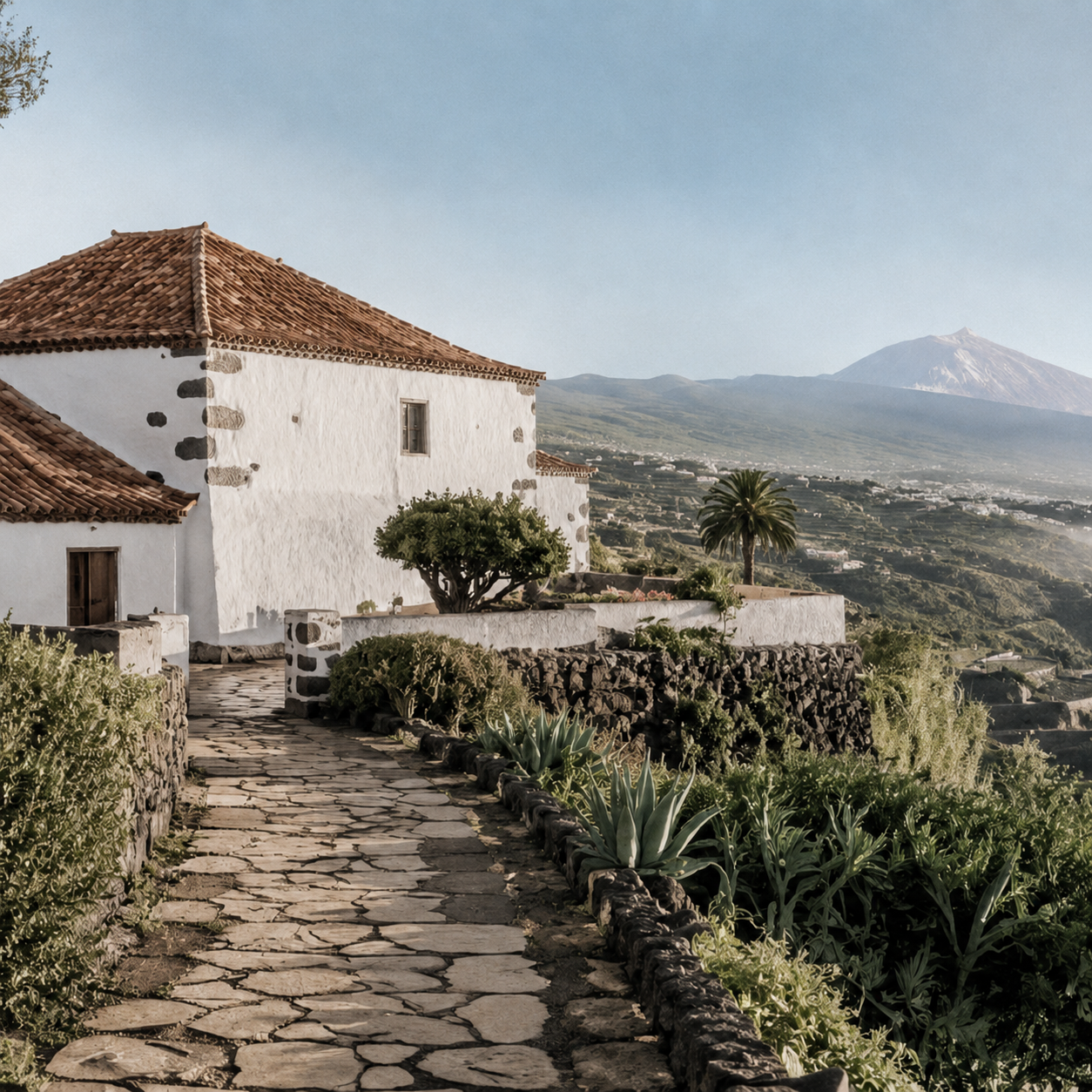
From La Matanza, the views over the northern side of Tenerife are one of its greatest attractions. The pedestrian walkway along the TF-5 road, with its viewpoints, allows visitors to explore much of the municipality on foot, with the Atlantic always by their side. The La Vica viewpoint is another of the classic viewpoints, with the sea in front and Mount Teide rising above the ridge.
And then there is Los Nateros: an agricultural plain in the mid-altitude area, the starting point for several hiking routes, where crops are grown practically all year round — potatoes, maize, beans, pumpkins and lupins — and from where three volcanic cones can be clearly distinguished: San Antonio, La Atalaya and Las Calderetas. It is probably the best place in the municipality to understand at a glance how this land works.
Heritage
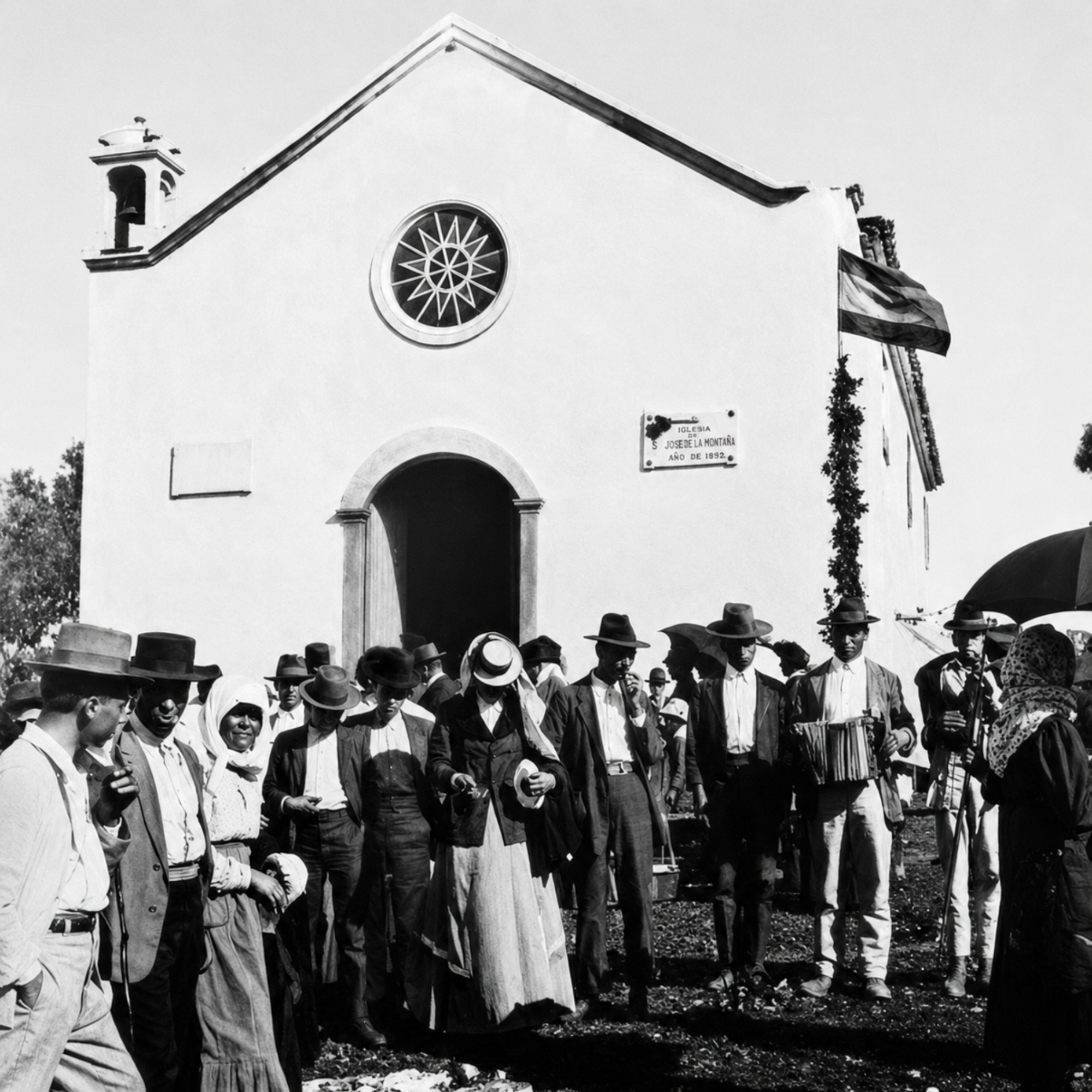
The Sanctuary of San Antonio Abad was born from a vow made in the heat of battle. Antón Vallejo — the first notary of La Laguna and the Town Council — fought at Acentejo and, fearing for his life, swore to build a hermitage dedicated to his patron saint if he emerged unharmed. He kept his promise: records show that the original temple was already standing by June 1539, with its own patronage, chaplaincy, and a small vineyard. It houses what is traditionally considered the first image of a saint to arrive in Tenerife after the conquest, and it is the setting for one of the oldest acts of devotion in the Canary Islands. In 2020, the diocese granted it the status of sanctuary.
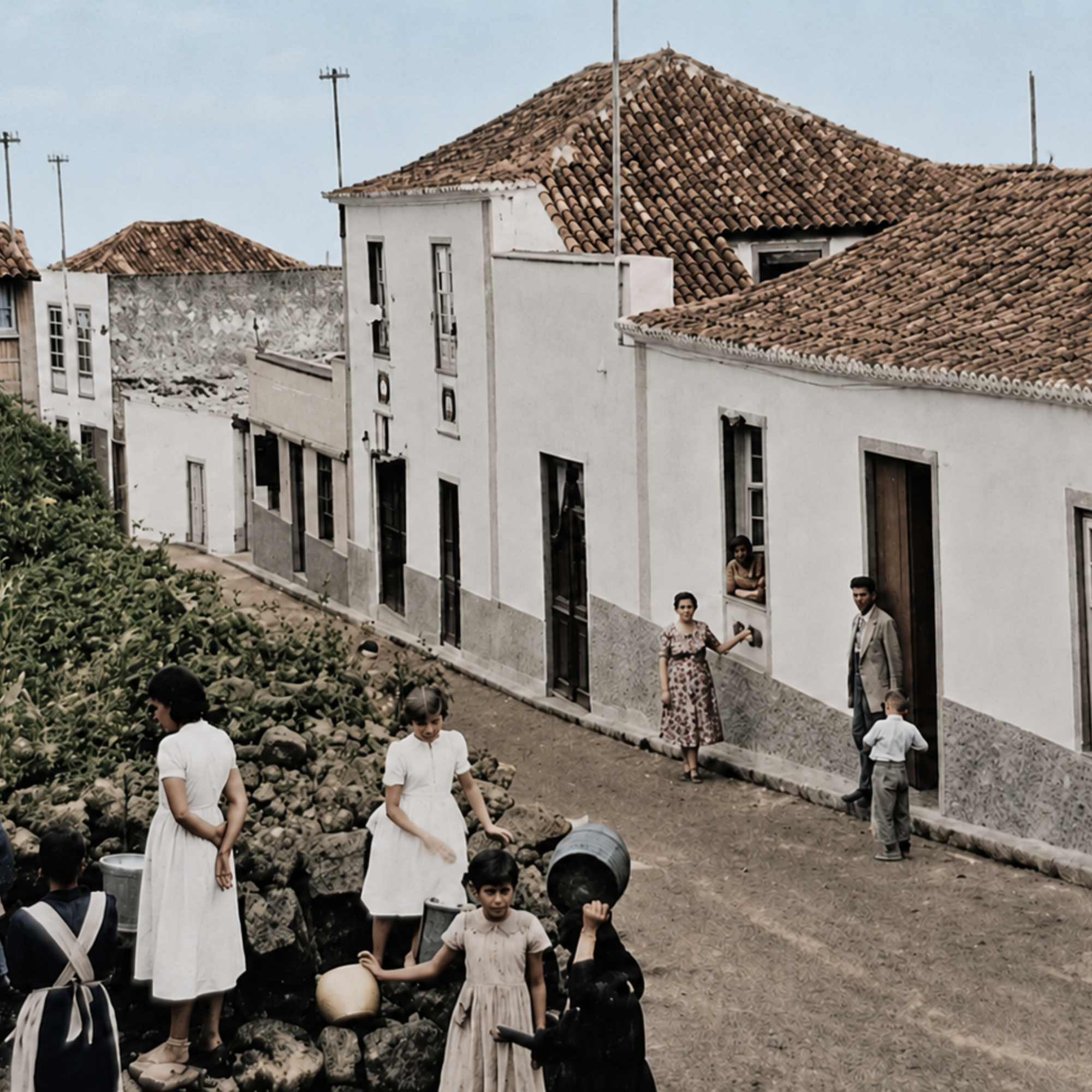
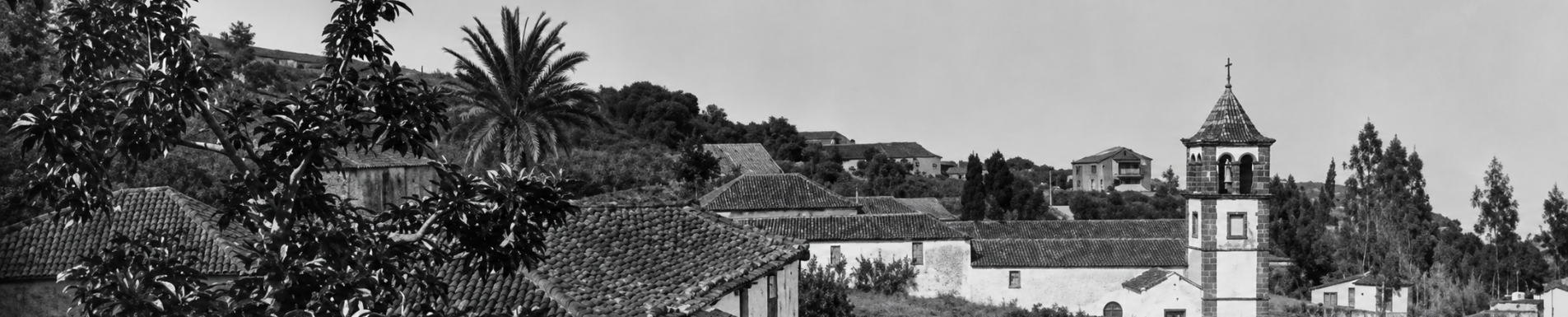
Everything else grew up around it. This includes the Parish Church of El Salvador, founded in 1615, and the hermitages of San Diego de Alcalá and Nuestra Señora de Guía. These chapels were built as the population expanded and today form part of the heart of the municipality: each hermitage gave rise to a neighbourhood, and each neighbourhood preserves its own festival. The town centre also retains traces of everyday life from another era, such as the Fuente del Pino —a former public washing place— and the Casa de Doña Sixta, an example of traditional Canarian architecture that still remains standing.
The coast
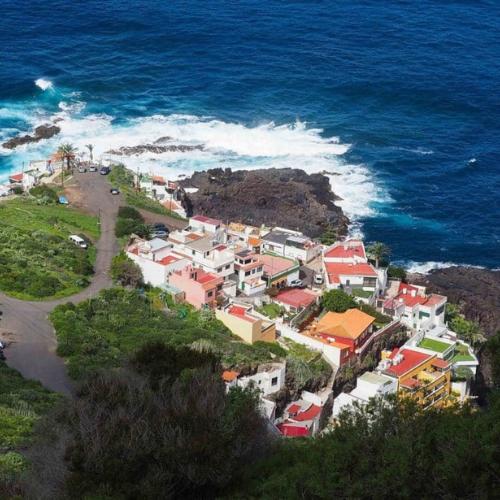
In La Matanza, the sea cannot be seen from the town centre: you have to go down to find it. The road winds down between vineyards and terraces, leaving behind the hum of the TF-5 and gradually narrowing until the final stretch, where the cliff opens up and El Caletón appears: a cluster of houses built on a tongue of lava that extends into the Atlantic and shelters a small cove. It is only a few kilometres from the town centre, but enough to feel like entering another world.
Here, volcanic rock is not just a backdrop; it is a building material. Much of the settlement is carved into it, while the rest is packed so close to the water that the sound of the sea can be heard from inside. There is a small anchorage for boats and a short beach, sixty metres of black sand, which fills up in summer with local residents carrying their coolers, umbrellas and claiming their usual spot. It is not a tourist destination: it is where the people of La Matanza come down to swim. In August, its festival brings music to the entire Costa Matancera.
Wine country
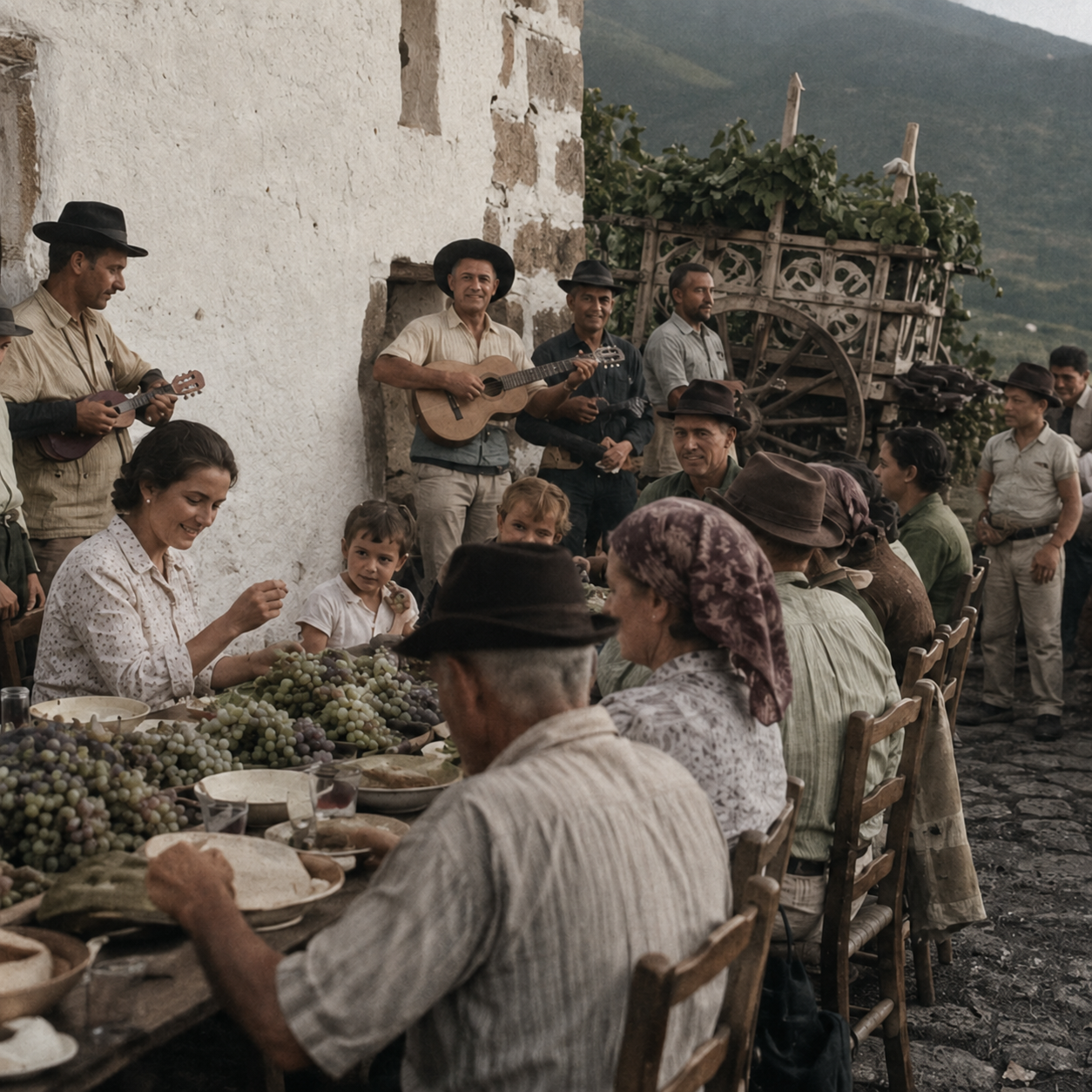
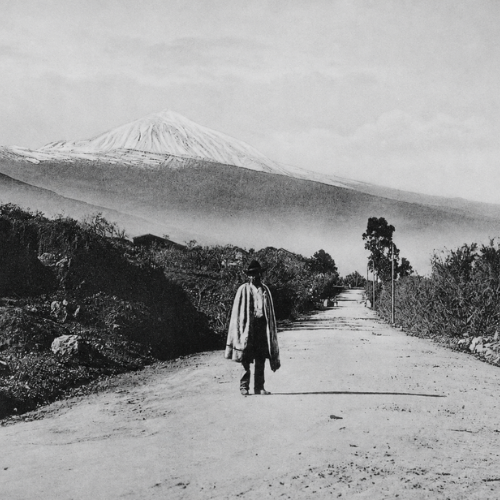
Following the conquest, the Acentejo region soon distinguished itself for its fertility, proving especially well-suited for viticulture. During the 16th and 17th centuries, wine became the area’s main economic driver: vineyards were planted on every cultivable hillside, and the product was exported to Europe and the Americas through the northern ports. Tenerife became a major Atlantic supplier, and this trade shaped the landscape that can still be seen today from any point in the municipality.
This tradition remains a living craft rather than just a picturesque backdrop. The vineyards of La Matanza belong to the Tacoronte-Acentejo Designation of Origin — the first to be recognized in the Canary Islands, in 1992. Cultivation takes place on terraces and stepped plots, almost entirely by hand, using the region’s characteristic rastras (low-trained vine) system, which leaves room for potato crops after the harvest. Listán Negro and Negramoll dominate among the red varieties, while Listán Blanco and Malvasía lead the whites; the vines are always grown on their own roots, as phylloxera never reached the islands. The result is a range of Atlantic-style red wines — fresh, with wild and earthy undertones.
Culture and traditions
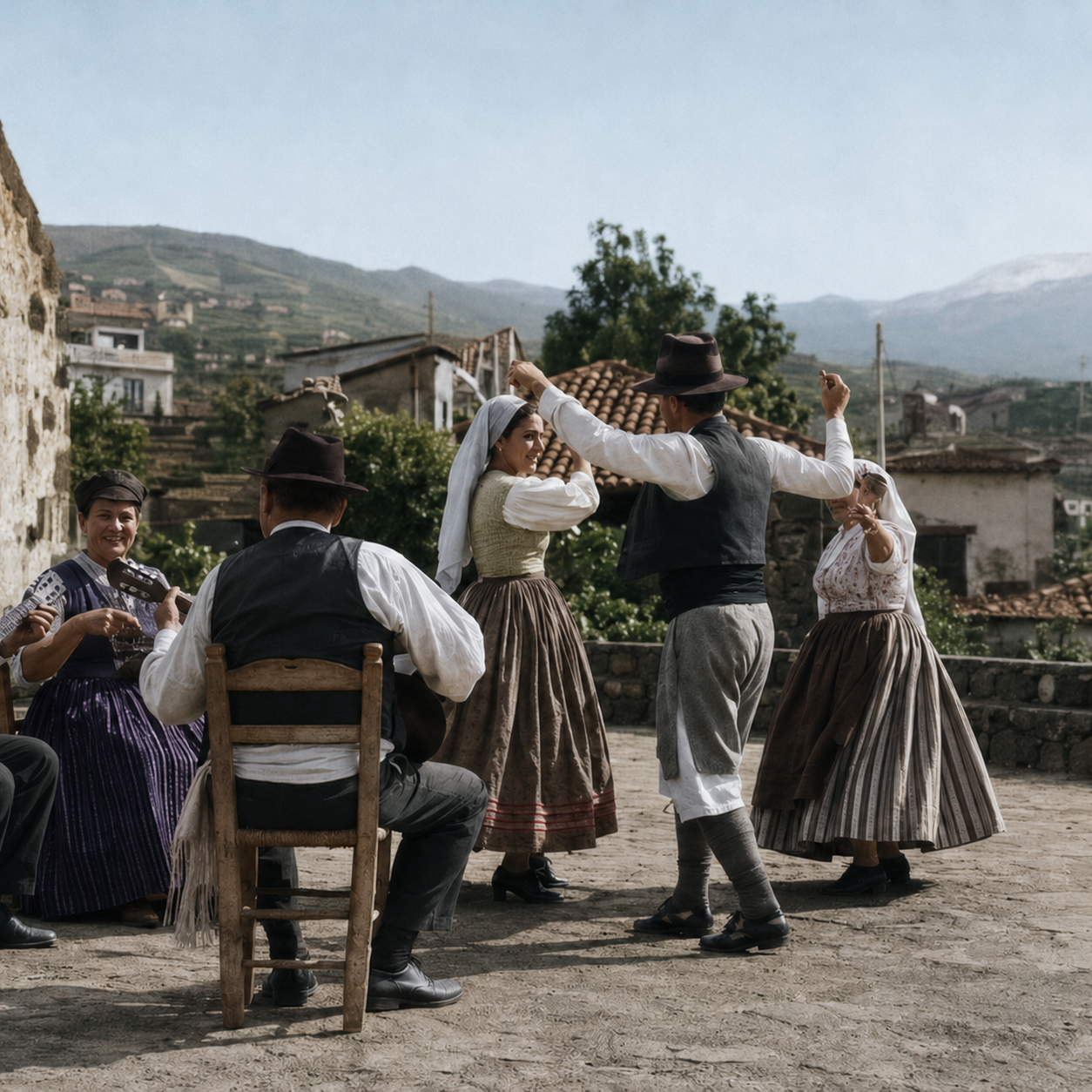
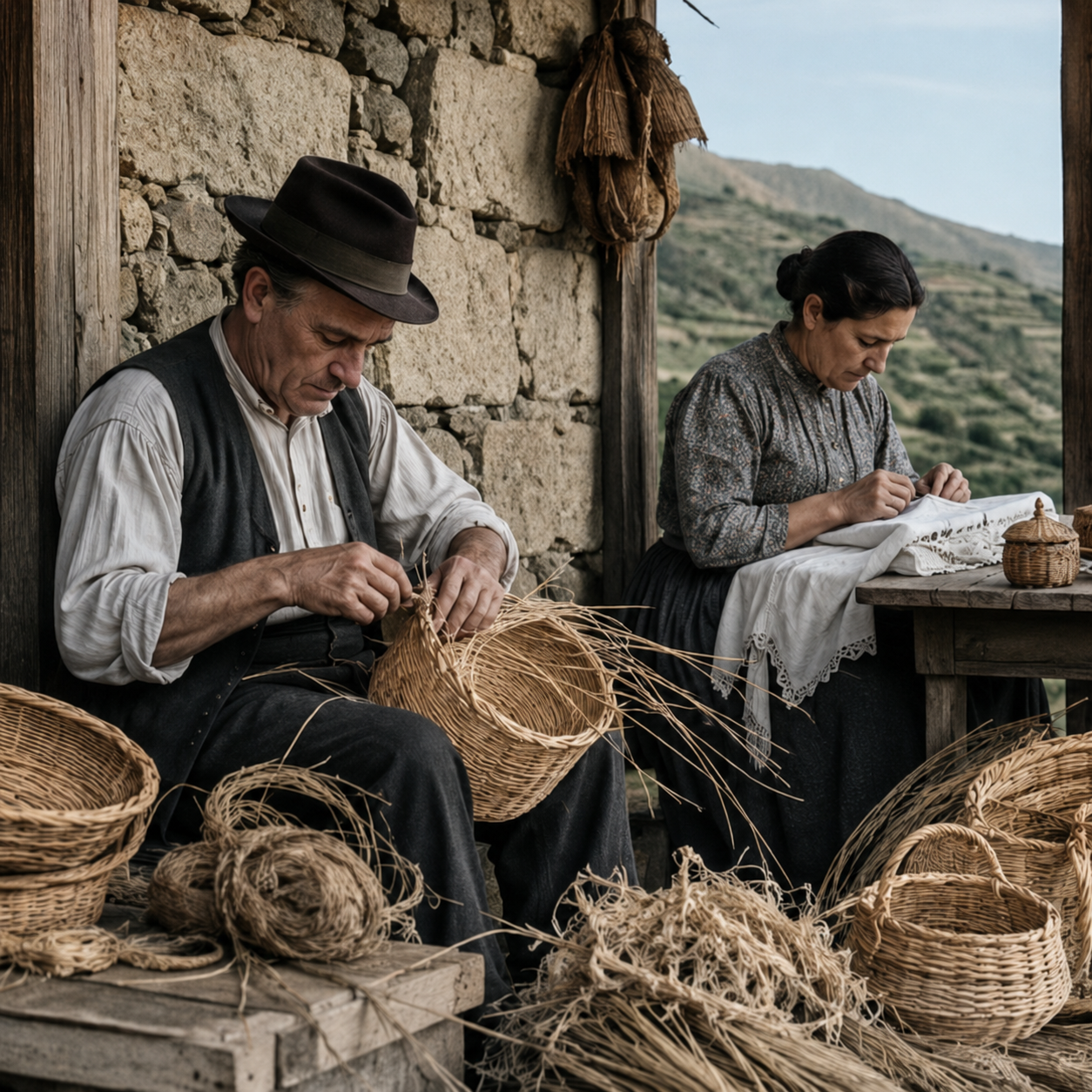
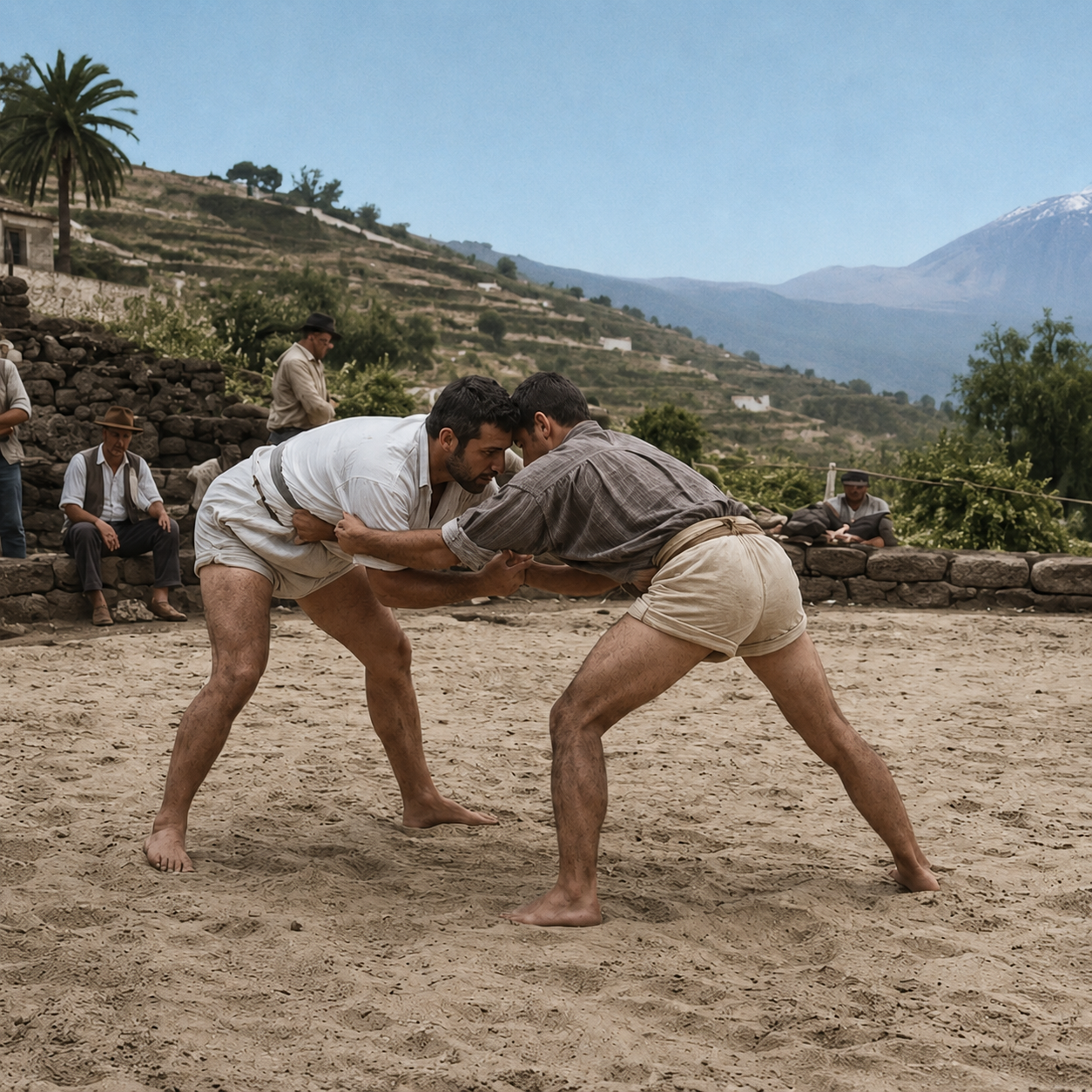
Matancera culture cannot be explained from a single place. It is spread between the hermitage and the wrestling ring, between the square and the ravine, between the vineyard and the old road. It is a mid-altitude culture: agricultural in origin, festive in expression, and deeply communal in the way it is passed on.
Within it coexist the memory of a founding episode in the island’s history, a popular devotion that shapes the calendar, a livestock tradition that continues to bring thousands of people together every January, and a wine culture that spans five centuries and continues to define the landscape. What follows is not an inventory of preserved relics, but a journey through living traditions.